Embark on a journey to explore the importance of data security in Mywellbeing programs and the key tips for GDPR compliance that EU employers need to know. This insightful guide delves into the risks of data breaches, the significance of GDPR regulations, and practical measures to safeguard employee data effectively.
Delve deeper into understanding GDPR compliance and best practices for ensuring data security in Mywellbeing programs. Learn about employee data rights under GDPR and how employers can navigate the complexities of data processing while upholding transparency and accountability.
Overview of Mywellbeing Program Data Security
Data security is paramount for Mywellbeing programs as they deal with sensitive employee information related to health and well-being. Safeguarding this data is essential to maintain trust and confidentiality within the program.Potential Risks of Data Breaches
- Unauthorized access to personal health information
- Data manipulation or loss
- Identity theft and fraud
Importance of GDPR Compliance
- Ensures transparency in data processing
- Protects employee rights to privacy
- Imposes strict guidelines on data handling and storage
Understanding GDPR Compliance
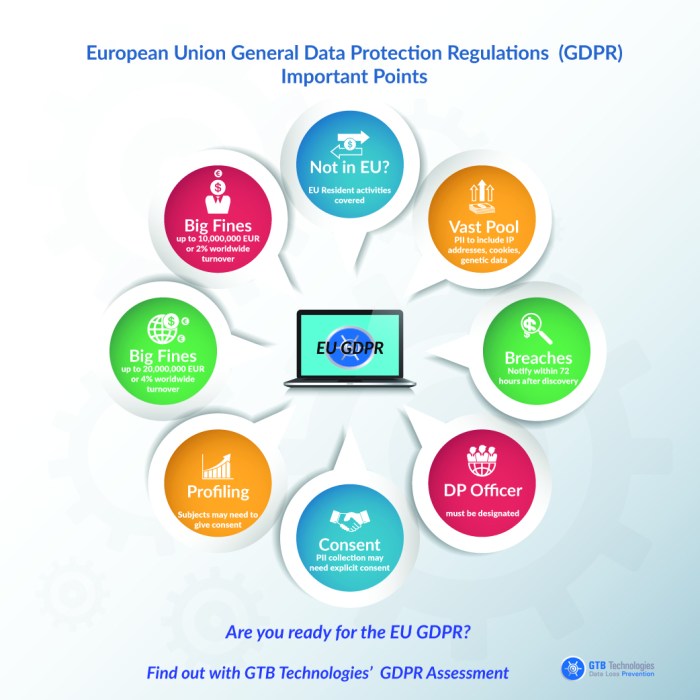
Employers in the EU must adhere to key principles Artikeld in the General Data Protection Regulation (GDPR) to ensure data security and privacy.
Key Principles of GDPR
- Consent: Employers must obtain explicit consent from employees before collecting and processing their personal data.
- Lawfulness, Fairness, and Transparency: Data processing must be lawful, fair, and transparent to the individuals whose data is being processed.
- Purpose Limitation: Personal data should only be collected for specified, explicit, and legitimate purposes.
- Data Minimization: Employers should only collect personal data that is necessary for the intended purpose.
- Accuracy: Employers must ensure that personal data is accurate and kept up to date.
- Storage Limitation: Personal data should not be kept for longer than necessary.
- Integrity and Confidentiality: Employers are responsible for ensuring the security and confidentiality of personal data.
Examples of Personal Data Covered by GDPR
- Names
- Addresses
- Email addresses
- Identification numbers
- Biometric data
- Health information
Consequences of Non-Compliance
- Financial Penalties: Non-compliance with GDPR regulations can result in fines of up to 4% of annual global turnover or €20 million, whichever is higher.
- Reputational Damage: Failure to comply with GDPR can damage an employer's reputation and erode trust with employees and customers.
- Loss of Business: Non-compliance may lead to loss of business opportunities, as partners and clients may prefer to work with GDPR-compliant organizations.
Tips for Ensuring Data Security in Mywellbeing Programs
When it comes to maintaining data security in Mywellbeing programs, there are several best practices that employers should follow to protect sensitive information.
Securely Storing and Handling Employee Data
- Implement access controls to ensure that only authorized personnel can view and modify employee data.
- Regularly update and patch software to prevent vulnerabilities that could be exploited by cyber attackers.
- Train employees on data security best practices to reduce the risk of human error leading to data breaches.
Encryption Methods to Protect Sensitive Information
- Utilize encryption algorithms to encode data in a way that only authorized parties with decryption keys can access it.
- Encrypt data both at rest (stored data) and in transit (data being transmitted over networks) to maintain confidentiality.
- Ensure that encryption keys are securely stored and managed to prevent unauthorized access to sensitive information.
Conducting Regular Security Audits to Identify Vulnerabilities
- Perform regular security audits and penetration testing to identify potential weaknesses in your data security measures.
- Address any vulnerabilities discovered during audits promptly to prevent exploitation by threat actors.
- Engage with cybersecurity professionals to conduct thorough assessments of your data security practices and make recommendations for improvement.
Employee Data Rights Under GDPR
Employee data rights under GDPR are crucial for ensuring the protection of personal information in the workplace. Employees have the right to know what personal data is being collected, how it is being used, and who it is being shared with. They also have the right to access their data, request corrections, and in some cases, request deletion.Employers can ensure transparency and accountability in data processing by clearly communicating their data processing activities to employees. This can be done through privacy policies, consent forms, and regular updates on how data is being used. Employers should also keep detailed records of data processing activities to demonstrate compliance with GDPR regulations.Obtaining Employee Consent for Data Processing
- Employers should obtain clear and explicit consent from employees before processing their personal data. This consent should be freely given, specific, informed, and unambiguous.
- Employees must be informed of their right to withdraw consent at any time and how to do so.
- Consent forms should be easy to understand and easily accessible to employees.
- Employers should keep records of employee consent to demonstrate compliance with GDPR regulations.
Summary
As we conclude our discussion on Mywellbeing Program Data Security and GDPR tips for EU Employers, it becomes evident that prioritizing data security and compliance is essential in today's digital landscape. By following the Artikeld practices and understanding employee data rights, organizations can foster trust and uphold data protection standards effectively.
Quick FAQs
What are the key principles of GDPR that EU employers must follow?
EU employers must ensure lawful, fair, and transparent processing of personal data, limit data collection to necessary information, and implement appropriate security measures to protect data.
How can employers ensure transparency and accountability in data processing?
Employers can achieve transparency and accountability by informing employees about data processing activities, documenting processing procedures, and appointing a Data Protection Officer to oversee compliance.
What encryption methods can be used to protect sensitive information?
Employers can utilize encryption techniques such as AES, RSA, or SHA-256 to safeguard sensitive data from unauthorized access.

![30 Unique Ways to Celebrate Employee Wellbeing Month [Calendar]](https://wellbeing.postingnews.id/wp-content/uploads/2026/02/juneemployeewellbeingmonthcalendar-160531161543-thumbnail-4-120x86.jpg)